


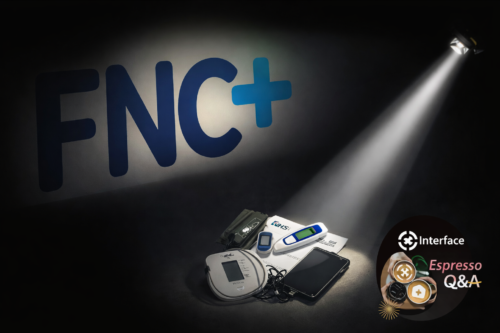
This week we’re putting a focused spotlight on Virtual Wards – what they are, how they work, and how they can support you and your patients.
Spotlight Week is about clarity.
It’s about being clear on the clinical model and the technology behind it. It’s about understanding how Virtual Wards connect with services across Lanarkshire – and how they may support care you are already delivering.
Over the course of the week we will:
• Hear directly from clinicians who are using the model in practice
• Look at the patient experience and what it means for recovery at home
• Explain how services can access or coordinate Virtual Ward support
• Share practical information for teams who feel this type of technology-enabled care could benefit their patients
Spotlight Week is an opportunity to provide clear answers to some of the questions we’re hearing, showcase how the system works and ensure colleagues feel confident in how and when to use it.
The dialogue doesn’t end here. This week also precedes a dedicated series of Virtual Ward Espresso sessions, where staff will be able to drop in, see the monitoring technology in action, ask questions and speak directly with the team leading its expansion. Full details of these sessions will be shared on Wednesday.
Our aim is simple: Virtual Wards spotlight week is about Transparency, reassurance and practical support.
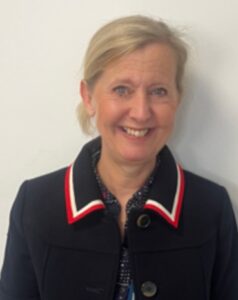
The first article in our series features a Q&A with Claire Ritchie, Interim Director of Interface.
Virtual Wards Spotlight Week
In conversation with Claire Ritchie
As Virtual Wards Spotlight Week begins, we’re starting with clarity — what Hospital at Home (H@H) Virtual Wards are, how they operate in practice, and how they are coordinated across services in Lanarkshire.
We spoke with Claire Ritchie to set out the model in straightforward terms.
Q: Claire, at its simplest, what are Virtual Wards?
A: At their simplest, Virtual Wards allow some patients to be safely monitored at home while remaining under NHS care.
Patients use secure tablets for monitoring to record things like blood pressure, oxygen saturation levels, temperature and heart rate. Our clinical teams review those readings at frequent intervals.
They do not replace hospital care when hospital treatment is needed.
Instead, they support patients who meet clear safety criteria to recover at home, with clinicians setting monitoring parameters for each patient and rapid escalation in place if their condition changes.
The aim is straightforward: safe care in the most appropriate setting, with full clinical oversight at all times.
Q: How does the monitoring work in practice?
Patients identified as suitable for Virtual Ward care are provided with simple, easy-to-use monitoring equipment. This may include:
• Blood pressure monitors
• Oxygen saturation monitors
• Thermometers
• Heart rate monitoring devices
• A short questionnaire that helps identify when a patient may need further clinical attention.
Patients take readings once or twice daily, as advised. These are transmitted securely via an encrypted digital platform into NHS Lanarkshire systems, creating a live clinical dashboard.
Healthcare professionals review readings daily. If parameters move outside agreed thresholds, patients are contacted promptly and reassessed.
Escalation pathways are clearly defined. If hospital admission is required, it is arranged without delay via FNC+Plus.
Q: Where does the company ‘Doccla’ fit into this model?
Doccla provides the remote monitoring equipment and secure digital platform.
They support:
• Device provision
• Encrypted data transmission
• Technical assistance for patients
• Training
• Clinical monitoring
• Collaboration with FNC clinicians through a multidisciplinary team, with specialist clinical input where appropriate.
Q: How are Virtual Wards coordinated across services?
At the centre of coordination sits Flow Navigation Centre+Plus (FNC+Plus) -NHS Lanarkshire’s 24/7 clinical coordination hub based at Kirklands.
FNC+Plus works alongside acute, primary care, community and ambulance services to provide shared clinical oversight for Virtual Ward pathways.
Services including OPAT, Respiratory teams, Hospital at Home, acute wards and community teams regularly liaise with FNC+Plus to arrange or coordinate Virtual Ward support where appropriate.
In addition, referrals may enter the system via NHS 24 (111), GPs and the Scottish Ambulance Service.
The FNC+Plus team reviews information early and works with the relevant service to determine the safest next step – hospital admission, community pathway or Virtual Ward monitoring.
Q: Why does this matter for staff?
Virtual Wards support the system in three key ways.
• Aims to support people to remain safely at home, while helping to support acute hospital capacity.
Helping to ensure hospital beds are available for the most acutely unwell.
• Maintaining safety through early review
Real-time monitoring allows earlier identification of deterioration.
• Supporting recovery in appropriate settings
Avoiding unnecessary admission or prolonged stay for suitable patients.
The model aligns with national priorities around digital innovation and sustainable service redesign.
Q: Is it safe?
Yes.
Virtual Wards are:
• Clinically led
• Consultant supported and delivered
• Governed by defined eligibility criteria
• Underpinned by secure NHS data systems
• Backed by clear escalation processes
Q: What would you say to colleagues who are still unsure?
They offer a safe alternative for some patients to remain at home, with regular clinical oversight and clear escalation pathways if their condition changes.
What matters most is safety. This model works because of the strength of our acute teams, our primary care and community services and the coordination provided through FNC+Plus.
It’s a collective effort. I’d encourage colleague to come visit us in Interface. Contact: alana.drumm@lanarkshire.scot.nhs.uk
Q: What’s next?
Over the course of Spotlight Week, we will:
• Hear directly from clinicians using the model
• Explore the patient experience
• Share practical guidance for teams who feel this approach could support their pathways
On Wednesday, we’ll also announce a series of Virtual Ward Espresso sessions, where staff can drop in, see the monitoring technology first-hand and speak directly with the teams involved.
