Second-hand smoke
Second-hand smoke awareness to highlight the risks for children and others in the home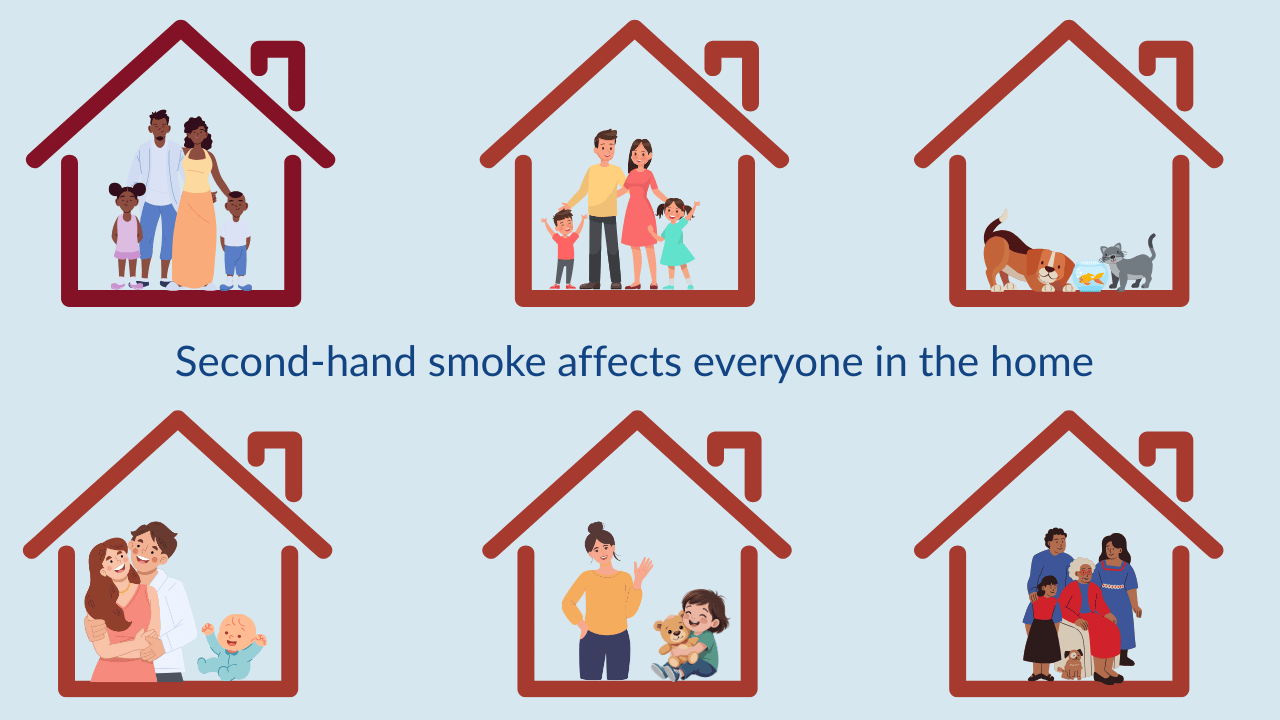
On this page:
Why reducing second-hand smoke is important?
Second-hand smoke is when we breathe in tobacco smoke from other people’s cigarettes, cigars, or pipes.
Every year, around 9,500 children in the UK are admitted to hospital because of exposure to second-hand smoke.
Children’s lungs and immune systems are still developing. Exposure to second-hand smoke can increase children’s risk of illnesses like asthma, wheezing, chest infections, and ear problems.
Parents and carers can protect them by making their homes, the homes their children visit and cars completely vape and smoke-free.
Jenny and the Bear
An interactive & fun way to highlight risks of second-hand smoke for children
Protect your family from the harms of second-hand smoke
Second-hand smoke is harmful to everyone’s health, even pets, but it’s especially harmful to babies, children and pregnant women.
Jenny and the Bear is a fun and interactive story for primary one children that raises awareness of the dangers of second-hand smoke.
The video highlights the risk of children’s exposure to second-hand smoke through an engaging story of a little girl and her teddy, as well as what parents/carers can do to ensure their children aren’t exposed to its harmful effects.
The Quit Your Way Team has also introduced a Jenny and the Bear colouring in sheet to print at home and children can pick their favourite colours to colour it in!
Watch video on YouTube.
The Jenny and the Bear story was developed as an interactive and fun way to support teachers to highlight the risks of second-hand smoke.
Children are especially vulnerable to second-hand smoke as their lungs and immune systems are still developing making them breathe faster; therefore, they inhale more toxic chemicals from tobacco smoke than adults.
We hope children enjoy these new resources which they can use over the school holidays too! We’re committed to continuing and developing initiatives that work with families to reduce the barriers they face to creating a smoke-free home and car.
Reducing harm
Small steps we can take to reduce harm from exposure to second-hand smoke
Although the smoke you can see disappears quickly, the particles are so small that 85% of them are invisible and odourless. The levels of invisible but harmful toxins in the air can be high, up-to 5 hours afterwards. There are small steps you can take to reduce harm from exposure to second-hand smoke:
- Smoking outside won’t completely protect our family – because some of the smoke settles on our clothes and is released back into the air when back inside – but it will reduce the risk.
- Wash your hands after smoking.
- Consider stopping smoking in the car. Please be aware that it is illegal to smoke in a car with children under the age of 18.
- You could also consider Nicotine Replacement Therapy such as gum, patches or lozenges, our team provide these free.
For more information on the dangers of second-hand smoke, visit NHS Inform. We can reduce the amount of smoke our family is exposed to by following the above steps, but quitting smoking is the best option for our families health and wellbeing.
Find out what local children said about smoking:
This video was created by Getting Better Together Shotts.
Families and pets
Protecting our families and pets from second-hand smoke
We want to give our family the best and healthiest lives we
can, and this includes our pets.
We may be aware of the risks of smoking for people, especially
children, but did you know that it is actually damaging to our
pets’ health as well?
Having a smoke-free home and car will protect our families,
pets and others in our household.
Watch BSL video version.
David Gardner-Roberts MRCVS, Veterinary Surgeon, ARMAC Vets:
“The levels of invisible but harmful toxins in the air can be high up to five hours afterwards and pose a threat to pets of all kinds including dogs, cats, birds, guinea pigs and even fish.
“Encouraging a smoke-free environment for children, families and pets can help protect them from inhaling the same toxic chemicals found in tobacco smoke. There is no safe level of second-hand smoke.”
Free Training for Staff Working with Children and Families
Second-Hand Smoke Awareness Training
Understanding the impact of second-hand smoke, and how to talk about it confidently, can make a real difference to the health and wellbeing of the people and families you support.
Our Second-Hand Smoke Awareness Training is designed for staff and volunteers who want to:
- Understand the health risks of second-hand smoke
- Learn effective, non-judgemental ways to talk with families about smoking
- Explore practical steps to help create smoke-free homes and cars
- Access up-to-date information and local support services
Format – 1-hour online via MS Teams or Face to Face
Why it matters – Children are particularly vulnerable to the effects of second-hand smoke. By raising awareness and supporting families to make small changes, we can help every child breathe cleaner, healthier air.
To organise a session please email: tobaccofreecharter@lanarkshire.scot.nhs.uk
More info or support to quit smoking
Quit Your Way can be contacted Monday – Friday from 9am until 5pm.
For more information, call 0800 84 84 84 or visit NHS Inform’s Quit Your Way website.
Complete our short sign up form, select your local or nearest area, leave your name, preferred contact method, and we will be in touch with you.
You can also visit your local Community Pharmacy for free stop smoking support. Find your nearest community pharmacy.
