
Bladder Advice
Pelvic Health Physiotherapy
On this page
- Normal bladder function
- Problems you can have with your bladder
- Why do these bladder issues occur?
- How to help bladder issues
- Pelvic floor muscle exercises
- Urine infections
- Personal hygiene
- Managing your bowel
- Other tips to help
- Staying positive
- Further information and resources
- Patient Information Leaflets
- Pelvic Health Physiotherapy home
This page will give you information about:
- how your bladder normally works,
- why you may have problems with your bladder,
- ways that you can help.
Normal bladder function
Your bladder stays healthy by filling and emptying urine (pee) throughout the day.
Your bladder collects and stores urine until it is full and needs to empty. The feeling of needing to pee increases as your bladder fills. You should be able to wait until you find the right time and place though.
Your pelvic floor muscles work to keep your bladder tube (urethra) closed. This keeps the urine in your bladder.
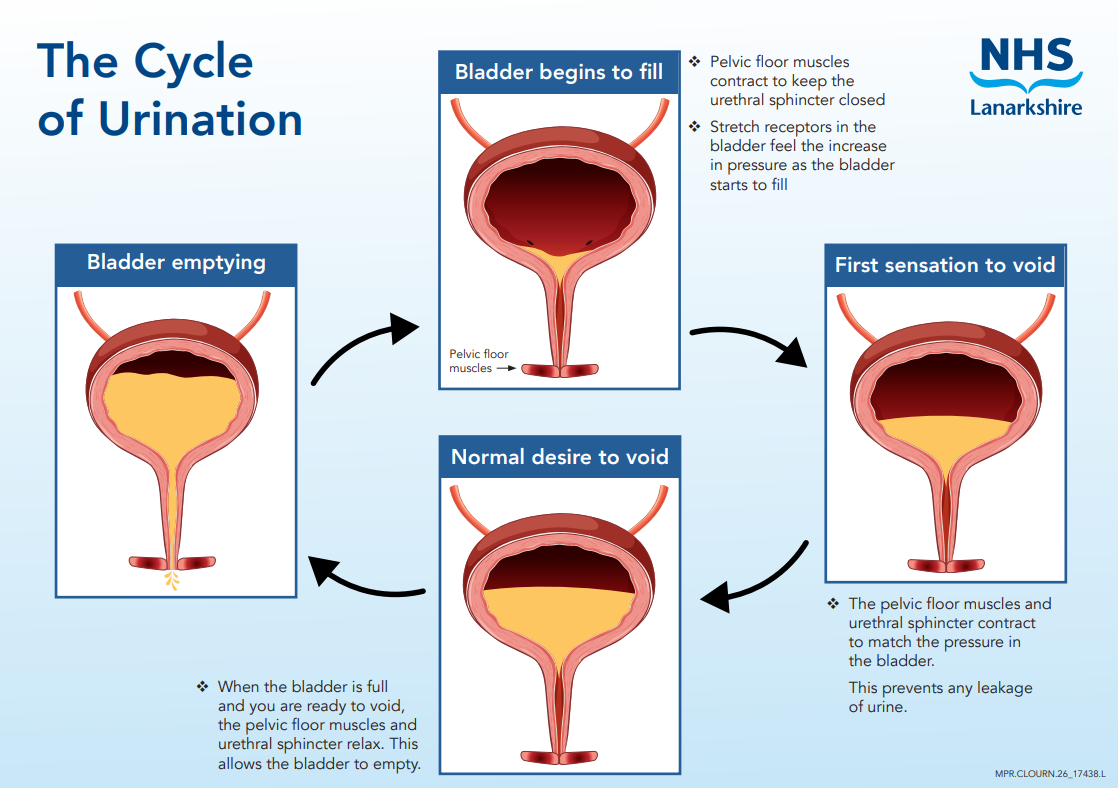
Most people need to pee between 6 – 7 times per day. This is about every 3 – 4 hours. Some people will need to pee once overnight too. As you get older, you may find you need to get up more often at night.
Most people start to feel they need the toilet when their bladder has about 150 – 200ml of urine in it. We often ignore these first signs. Your bladder can hold about 400ml of urine. Then you need to go to the toilet to pee.
When you are ready to pee, the muscle inside your bladder (detrusor muscle) tightens. Your pelvic floor muscles relax at the same time. This lets the urine flow out. You should:
- have a good flow of urine
- feel that you are completely empty
- have no dribbling of urine after you have left the toilet
It is important to keep your bladder and pelvic floor
muscles healthy. This helps to avoid problems with your bladder.
Problems you can have with your bladder
Bladder issues can be a common problem. They can be distressing and affect your quality of life. You are more likely to have bladder problems if you are over 55 years old.
You may have one or more of the following symptoms:
Stress Urinary Incontinence
Leaking urine when you do activities that put pressure on your bladder. This could be when you:
- cough
- sneeze
- laugh
- jump
- exercise
Physical strain increases the pressure in your tummy (abdomen). This puts pressure on your bladder. If your pelvic floor muscles are weak, urine can leak out.
Urinary Urgency
A sudden need to pee. This gives you little or no time to get to the toilet.
Urinary Urge Incontinence
A sudden need to pee. Some urine leaks out before you get to the toilet.
Urinary frequency
The need to pee more than 8 times per day.
Nocturia
The need to pee more than once during the night.
Overactive Bladder
Overactive bladder (OAB) has a variety of bladder symptoms:
- Urgency
- Urge incontinence
- Frequency
- Nocturia
For more information see our Patient Information Leaflet ‘How to help an overactive bladder‘.
Why do these bladder issues occur?
Bladder issues can happen for many reasons. You are more likely to have bladder issues if you have one or more of these risk factors:
- Pregnancy and childbirth in the past
- Increasing age
- Lower oestrogen hormone levels around the time of menopause
- Pelvic surgery in the past
- Soft tissue or neurological conditions that make you more prone to bladder issues
- Lifestyle factors such as:
- having a manual job
- an unhealthy diet
- being overweight
- smoking
How to help bladder issues
Bladder issues are common but they are not normal. Bladder problems can improve with the right advice. Simple changes to your lifestyle can have a big impact.
Healthy drinking habits
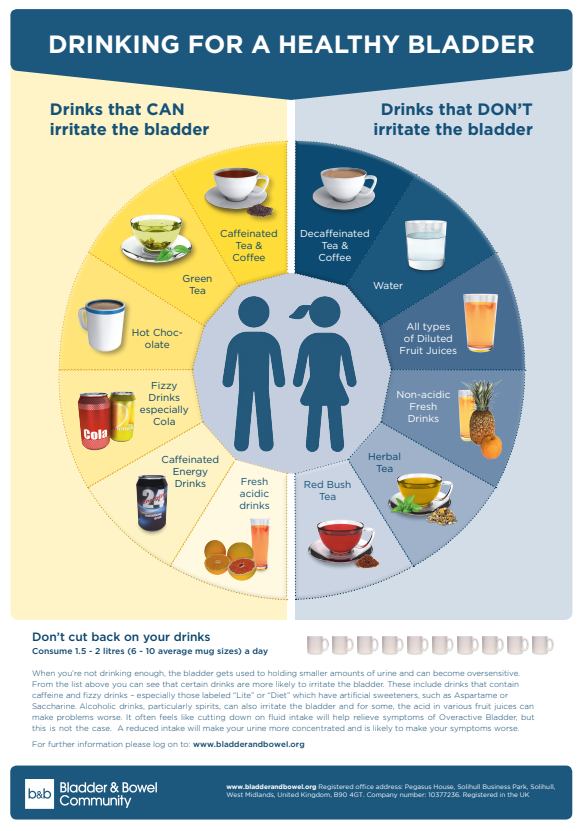
Try to drink 1.5 – 2 litres (3 – 4 pints) of fluid per day. Try not to limit the amount of fluid you drink. Drinking too little makes your urine stronger (dark coloured urine). This can irritate your bladder and make you want to pee more often.
There are drinks you should avoid as they can irritate the bladder. These include:
- Tea and coffee (caffeinated)
- Fizzy drinks
- Green tea
- Hot chocolate
- Alcohol
- Blackcurrant and fresh orange juice
- Drinks with artificial sweeteners – found in diet drinks
You should reduce the amount of caffeine you drink slowly. This will stop you feeling unwell from the withdrawal effects.
Drinks that do not irritate the bladder include:
- Water
- Diluted juice
- Milk
- Decaffeinated tea and coffee
- Herbal tea
Bladder retraining
Bladder retraining helps you to get your bladder control back. It works by gently stretching your bladder muscle so that it stays more relaxed as it fills. This should make your bladder less sensitive and less irritable. You should not need to go to the toilet as often.
Bladder retraining also helps to stop urine leaking out before you get to the toilet. Try not to rush to the toilet as soon as you feel a strong need to pee.
Watch the “How to train your bladder” video by Jilly Bond below. This will give you more information on bladder retraining.
How to help your bladder urgency
When you feel a strong need to pee, try not to rush to the toilet. It is important to try to hold on. If you find this difficult, try these steps:
- Stay calm and try some slow deep breathing.
- Sit on something firm – like the edge of a chair or the arm of a seat.
- Try to tighten your pelvic floor muscles a few times. Visit our Pelvic Floor Muscles Exercise page for more information about your pelvic floor muscles and how to do these exercises.
- Try to take your mind off needing the toilet. Here are some things you could try:
- Do the 9 times table in your head
- Say the alphabet backwards
- Take 7 away from 100. Then take 7 away from 93. Then take 7 away from 86 and so on until you get to 0
It should take 15 – 20 seconds for the urge to pass. Then slowly walk to the toilet.
Increase the time between visits to the toilet
Start with your normal toilet routine. At first, you might only be able to hold off for a few minutes when you feel the urge to go.
When you have managed that for a few days, try holding off a little longer. Aim for 5 – 10 minutes.
Keep trying. It could be a few days or weeks before you see any improvements.
The aim is to pee every 3 – 4 hours during the day.
Reducing Visits to the toilet overnight
As you get older, your kidneys can make more urine overnight.
If your legs are swollen, try putting them up in the afternoon or evening. Put them on a cushion or the arm of a chair. Make sure they are above the level of your heart. This will help to reduce the amount of fluid your body needs to get rid of overnight. You should not have to go to the toilet as often.
If you need to pee more than once a night, try having your last drink 2 hours before bedtime.
Watch the “Going at night? Optimise that bladder!” video by Jilly Bond below. This will give you more information on overnight toileting.
Emptying your bladder
You may find it difficult to empty your bladder. You may also leak some urine after you have stood up from the toilet.
- Do not rush to pee. Take your time to sit and try to empty your bladder fully.
- Do not hover over the toilet. Always sit on the toilet seat. This helps your pelvic floor muscles relax fully and lets the urine flow.
It is important not to rush to empty your bladder.
If you feel that you are not fully emptying your bladder you can:
- Try some deep breathing
- Relax your pelvic floor and lower tummy muscles
- Change your position on the toilet. Try rocking forwards and backwards on the toilet seat 3 – 4 times. Bring your chest down to your knees. Wait for 30 seconds to see if any more urine comes out.
- Before you stand up, tighten your pelvic floor muscles quickly 5 times. Hold the muscles tight and then stand up.
Pelvic floor muscle exercises
Start doing pelvic floor muscle exercises. Visit our Pelvic Floor Muscles Exercise page for more information about your pelvic floor muscles and how to do these exercises.
Urine infections
There are many different symptoms of a urine infection. Some of the symptoms may include:
- Having to pee more often and/or more urgently
- A constant dampness or ‘drip’ leakage, slow flow or difficulty peeing
- A burning sensation in your bladder or bladder tube (urethra) when you pee
- A feeling of not emptying your bladder fully
- Pain in your tummy – either low down in the pubic area (bladder) or higher up on the sides or back (kidney)
- Feeling generally unwell
- High temperature (above 37.9 degrees)
- Shivering – shaking or shivering can happen with a high temperature
- Cloudy, “dirty” or smelly urine
- Blood in your urine (haematuria)
It is important to contact your GP as soon as possible if:
- You cannot pee
- You have pain or a burning sensation when you pee
- You notice blood in your urine
- You are concerned that you have a urine infection
Personal hygiene
- Women only: after doing a pee or poo, wipe your bottom from front to back.
- Remember to always wash your hands after going to the toilet.
- Use a personal water-based lubricant during sex. Choose one without parabens.
- Pee after you have had sex. Then wash the area with water and pat dry.
- Avoid products with fragrances when bathing. These can irritate your vulva and urinary system.
Managing your bowel
Poo should be soft and easy to pass. Try not to get constipated or strain when doing a poo. Eat a balanced diet with plenty of fluid.
If you are constipated, your poo may be hard and difficult to pass. A full bowel can put pressure on your bladder and make it harder to empty. You may need to pee more often. Straining to poo may stretch and weaken your pelvic floor muscles.
To help prevent constipation:
- Drink around 1.5 – 2 litres (3 – 4 pints) of fluid per day.
- Eat more fibre. Try to do this slowly over a few weeks. These foods contain fibre:
- fruit and vegetables
- wholegrain cereals
- porridge
- wholemeal bread
- pulses such as beans and lentils
- Move more and exercise often.
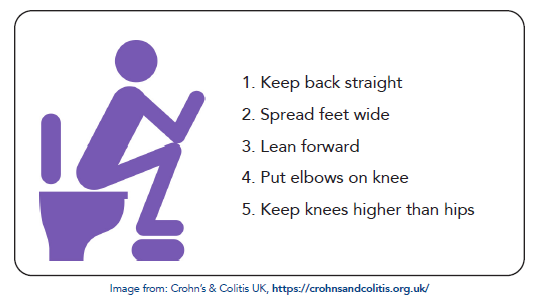
- Sit the right way on the toilet to avoid straining:
- Put your feet on a small foot rest so that your knees are above your hips
- Lean forward, rest your arms on your knees and relax your tummy muscles
Other tips to help
Weight
Aim for a healthy weight for your height. Being overweight puts pressure on your bladder and pelvic floor muscles. Losing even a small amount of weight can help improve your bladder symptoms.
Staying active
Staying active and doing regular exercise can help. This helps to:
- improve your bladder control
- prevent constipation
- reduce the risk of urinary tract infections
- strengthen your pelvic floor muscles
- keep your weight healthy
- support your overall wellbeing
Sleep
Try to get a good night’s sleep. Often, something else disturbs our sleep and then we get up to use the toilet. Check your sleeping patterns.
Long-lasting cough
A cough that lasts a long time can stretch and weaken your pelvic floor muscles. This can make your bladder issues worse. Speak to your GP for help to control your cough.
Smoking
Smoking can cause a cough. This can irritate your bladder and weaken your pelvic floor muscles. If you want help to stop smoking, you can self-refer yourself to the “Quit Your Way” service. See below for more information.
Medication
Some medications can cause bladder and bowel symptoms or make them worse. It may be worth speaking to your GP about this.
Staying positive
Do not be put off by setbacks. You may have good days and not so good days when you are trying to improve your bladder control.
You may notice you have less control of your bladder:
- if you are tired, run down or have a cold
- if you are busy and have many things on your mind
- if you feel tense and anxious
- if it’s cold, rainy or windy outside
Changing your habits to control your bladder takes time and effort but stick with it!
If you have tried the advice above and your symptoms have not improved,
ask your GP to refer you to a Specialist Pelvic Health Physiotherapist.
Further information and resources
- Pelvic, Obstetrics and Gynaecology Physiotherapy (POGP)
https://thepogp.co.uk/ - Bladder Health UK:
bladderhealthuk.org - Bladder & Bowel Community:
Supporting Your Bladder & Bowel Health | Bladder & Bowel Community - BDA – Fibre Food Facts:
https://www.bda.uk.com/resource/fibre.html - Smoking Cessation:
Quit Your Way 0800 84 84 84
https://www.nhslanarkshire.scot.nhs.uk/services/quit-your-way/
