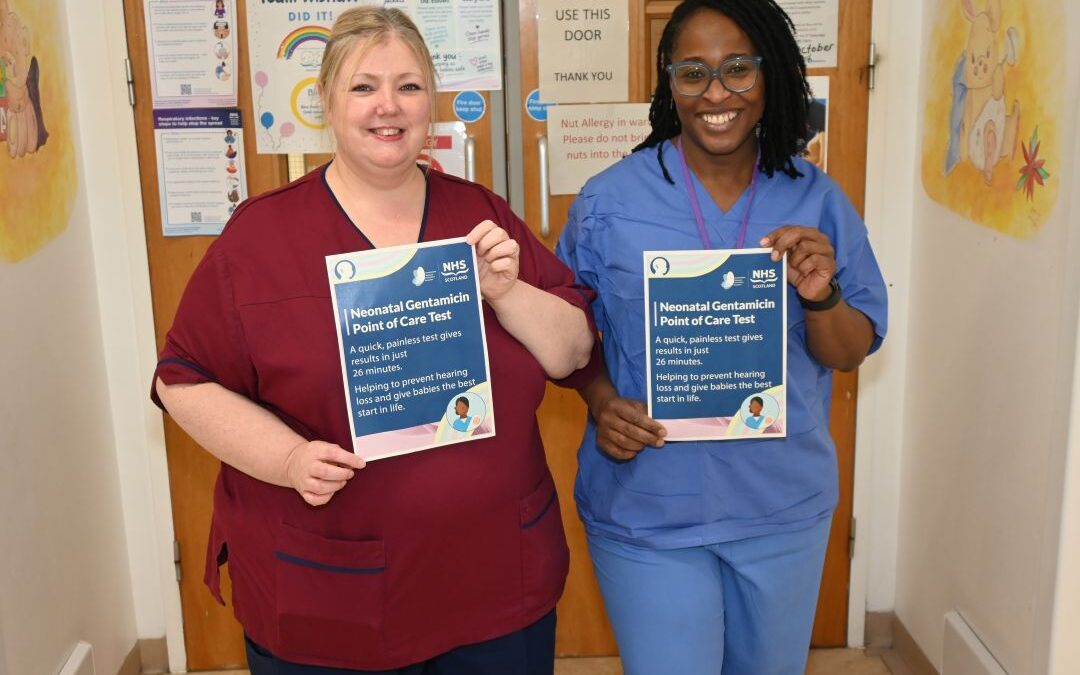
NHS Lanarkshire has introduced a rapid bedside genetic test for newborn babies with suspected serious infections.
The new point-of-care test is part of a national NHS Scotland programme which will help clinicians provide safer and more individualised antibiotic treatment.
Dr Augusta Anenih, consultant neonatologist at University Hospital Wishaw, said: “When newborn babies show signs of a serious infection, clinicians may prescribe an antibiotic called gentamicin. For most babies, gentamicin is a safe and effective treatment. However, a small number of babies carry a specific genetic variant that puts them at an increased risk of permanent hearing loss after exposure to antibiotics such as gentamicin.
“The new bedside test uses a quick and gentle cheek swab to identify whether a baby carries the genetic variant. A result is available in around 26 minutes, enabling the clinical team to prescribe an equally effective alternative antibiotic where appropriate.
“This new test is an important development for neonatal care in Lanarkshire and will help us provide safer, more personalised treatment for newborn babies.”
NHS Scotland is the first health service in the UK to introduce the test nationally for newborn babies with suspected infections.
The programme is being delivered through the Accelerated National Innovation Adoption pathway, led by the Centre for Sustainable Delivery at NHS Golden Jubilee National Hospital.
Sharon Oosterbosch, neonatal senior nurse at University Hospital Wishaw, said: “Having a newborn baby treated for a suspected serious infection can be an extremely worrying experience for families.
“This simple and gentle test will help our neonatal teams make informed treatment decisions quickly, while giving parents additional reassurance that their baby’s individual needs are being considered.”